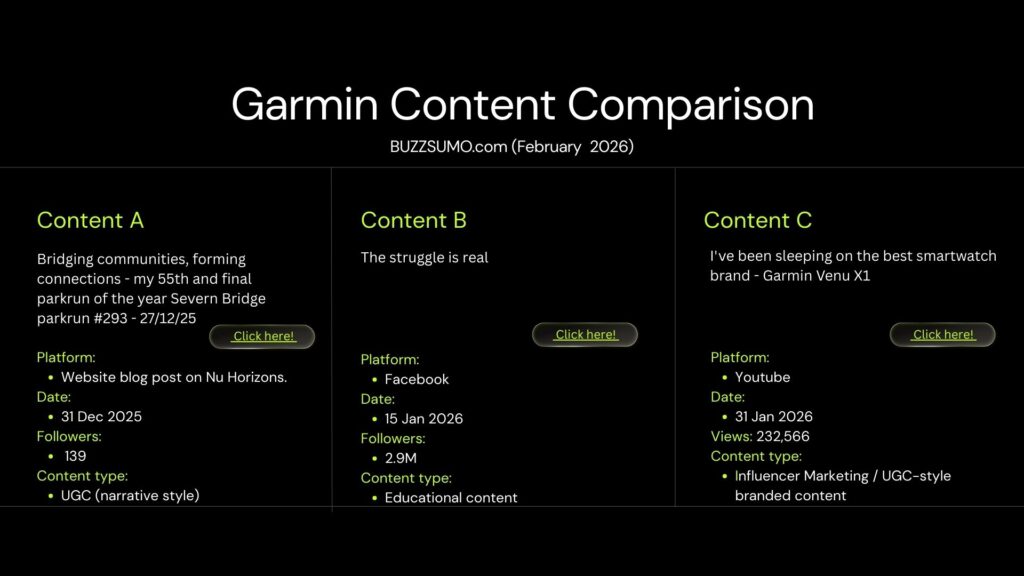
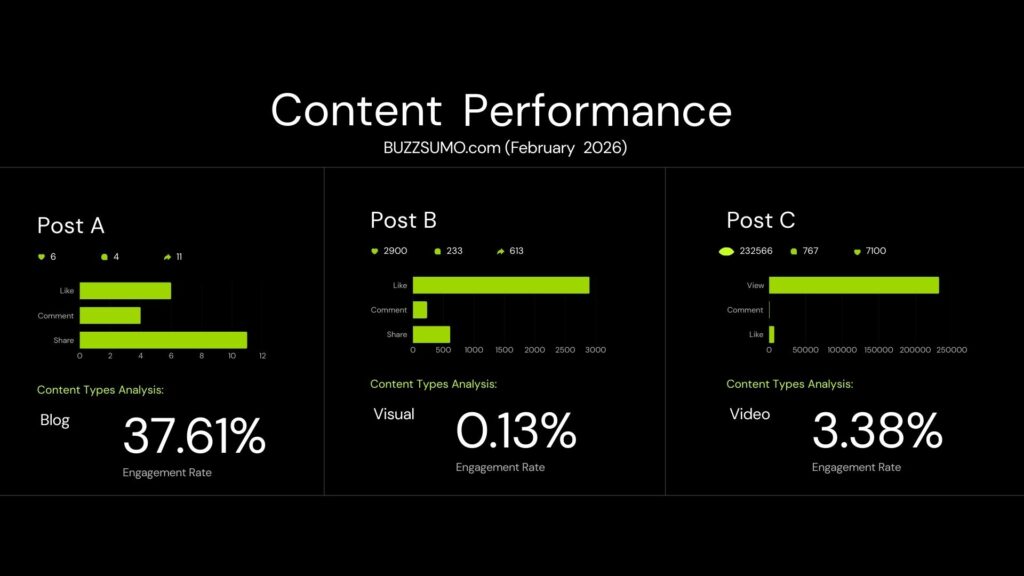
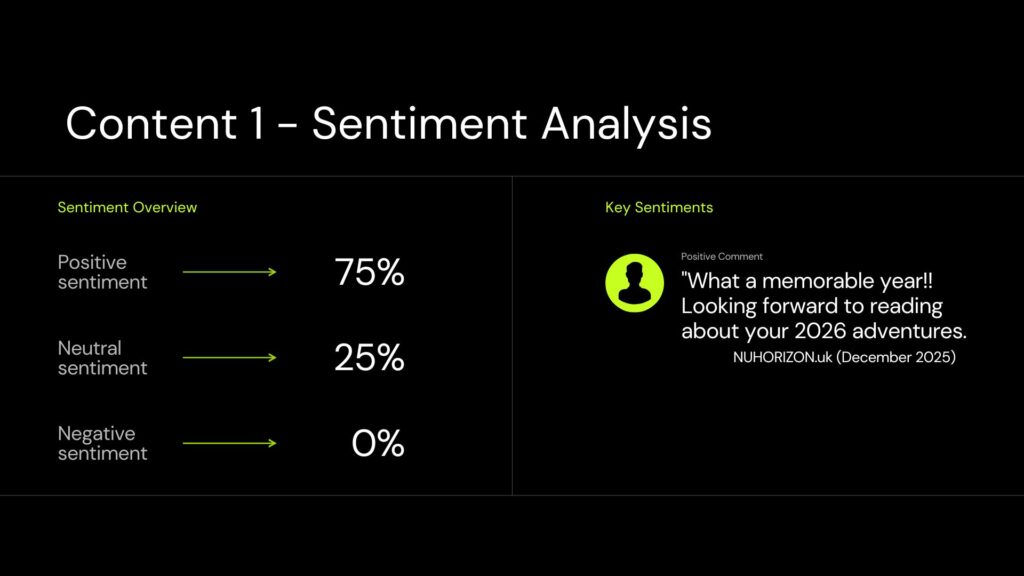
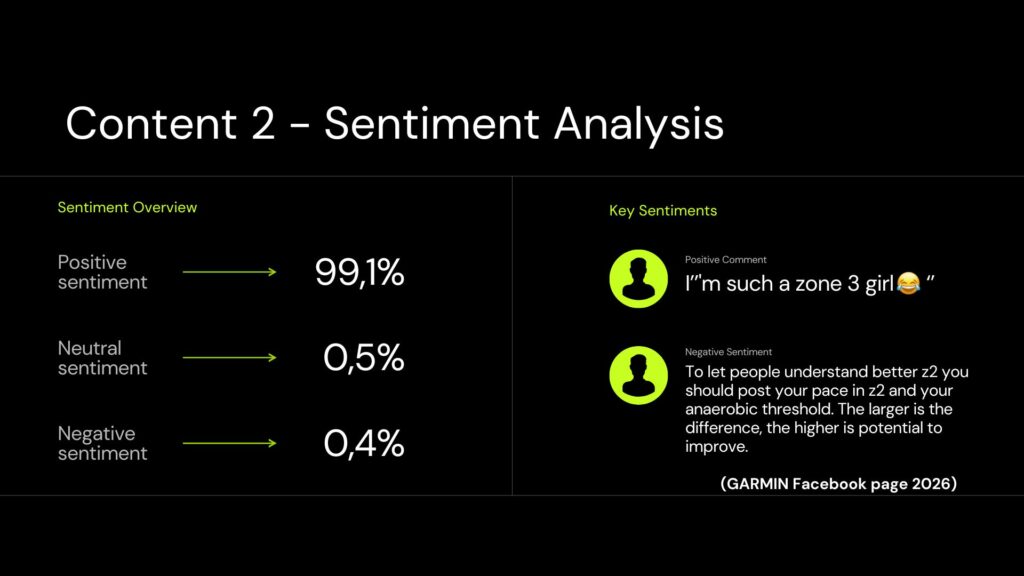
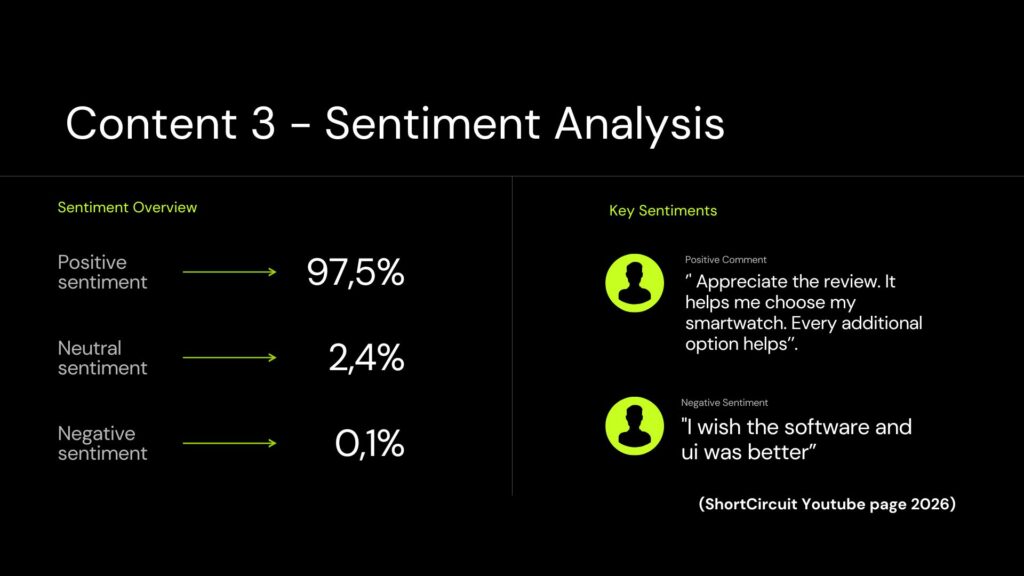
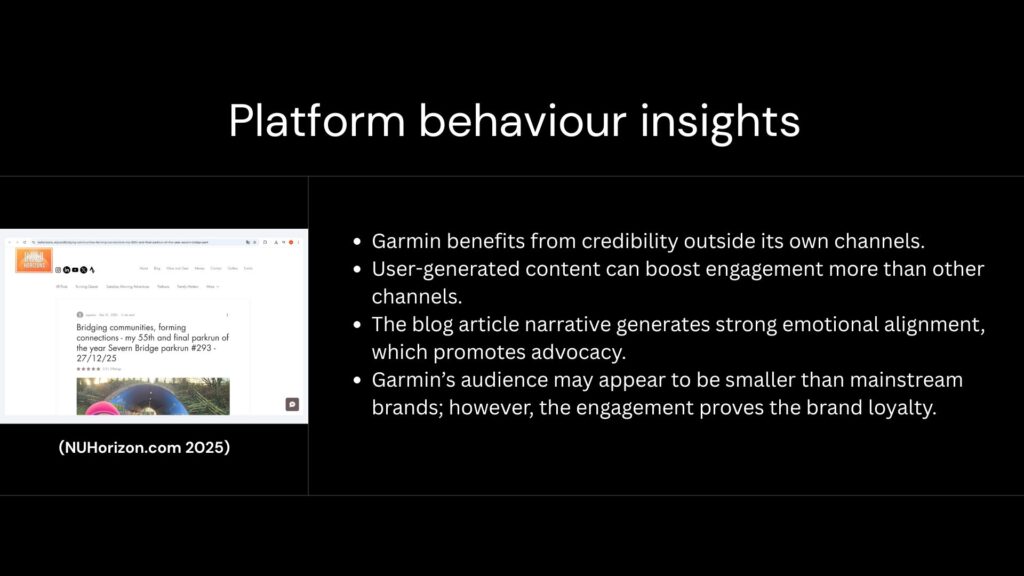
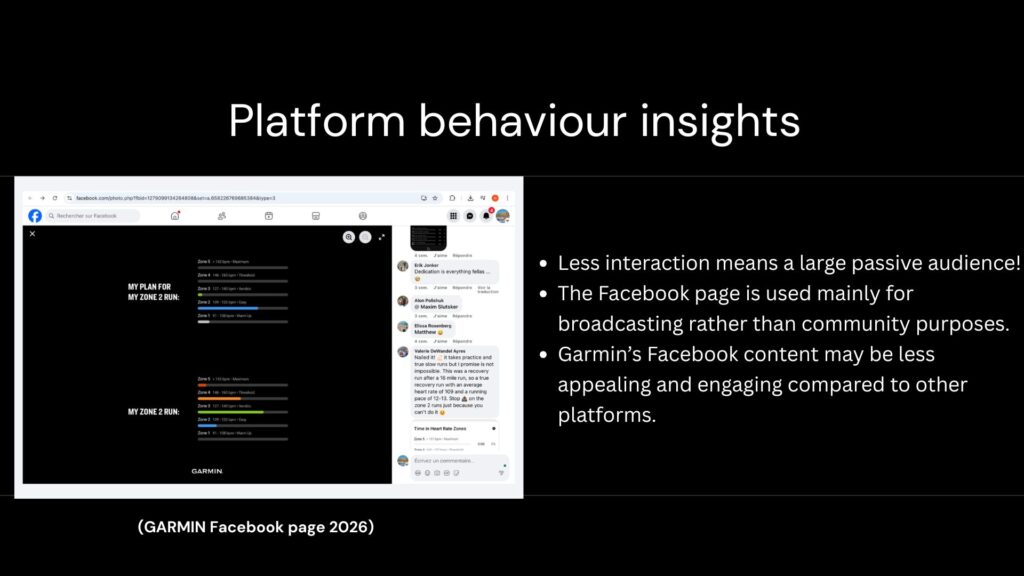
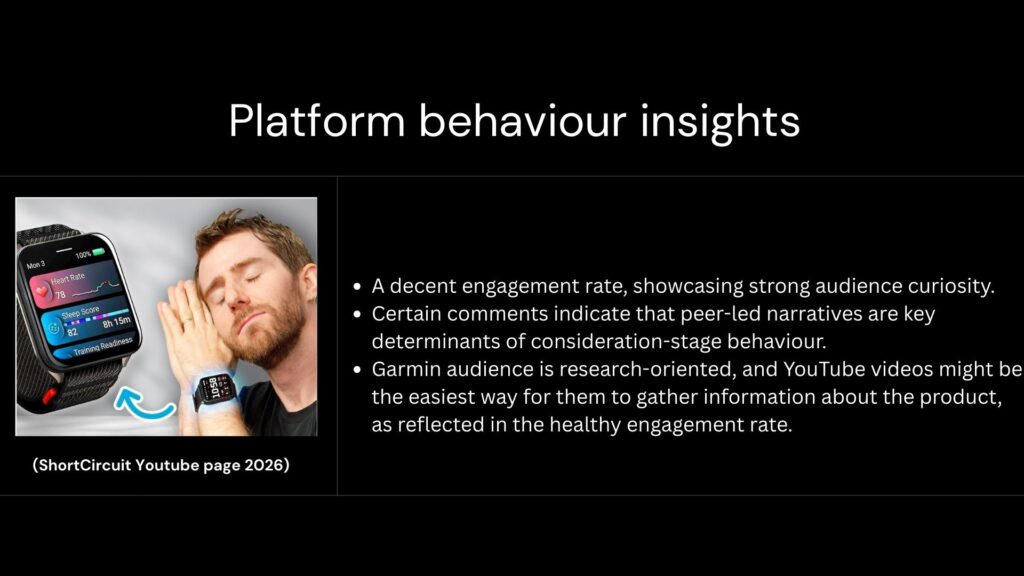
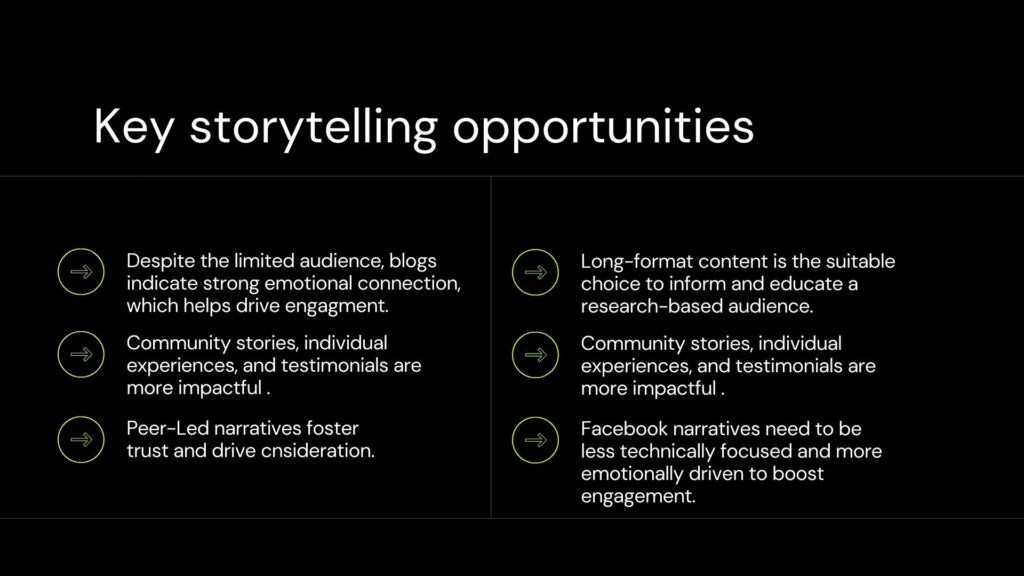
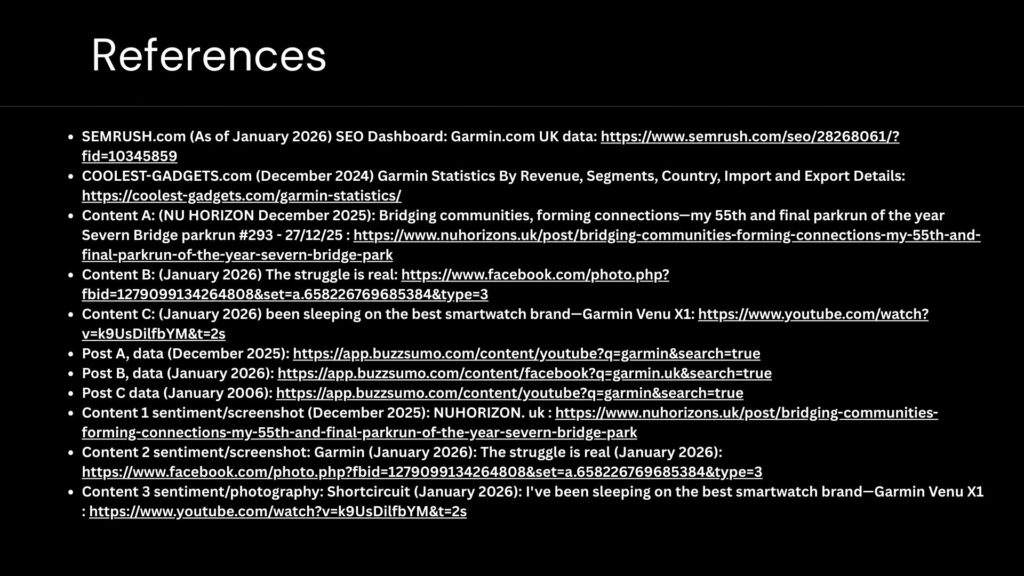
Garmin’s digital performance analysis shows clear audience content preferences. Blog (NU Horizon,2025) content remains the most important in terms of engagement rate by roughly 29.5% (calculated based on Buzzsumo data,2025), However, while the blog’s reach was significantly lower compared to the other channels, it illustrates a strong emotional connection, which is very important to promote advocacy. In contrast, branded Facebook (Garmin,2026) content with a significantly larger audience of 2.9 million, generated lower engagement 0.13% (calculated based on Buzzsumo data,2026), which can likely be explained by a pattern of passive consumption. Meanwhile, influencer-led content on YouTube (ShortCircuit,2026) generated a decent engagement rate, approximately 3.4% (calculated based on Buzzsumo data,2026), showcasing a strong audience curiosity. As a research-oriented audience, Garmin’s users rely on peer-led narratives in the consideration stage.
Overall, this analysis unveils several key opportunities for Garmin to consider in order to enhance and strengthen its brand storytelling strategy. Community stories, individual experiences, and testimonials seem to be the most impactful content types. Leveraging emotional and peer-led narratives across community, influencer, and brand platforms can help drive engagement, foster trust, and eventually promote brand advocacy.