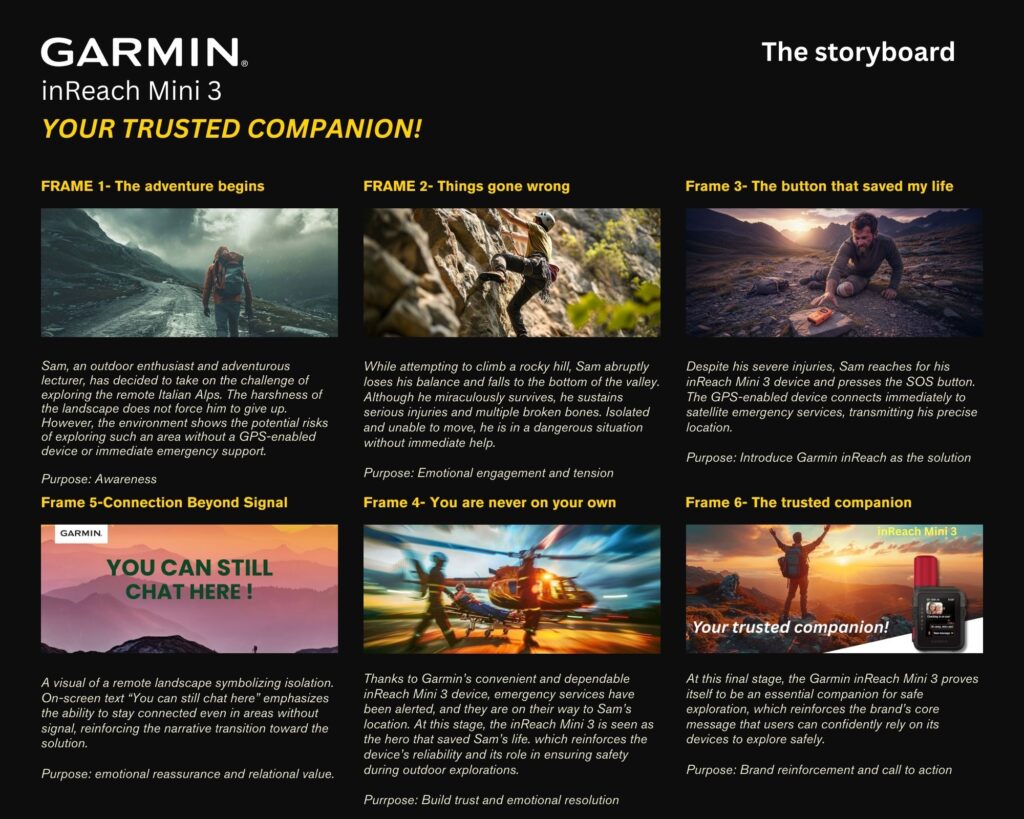
Based on the valuable insights derived from the digital performance analytics I conducted, I decided to focus on one of the company’s latest products: the satellite communicator inReach Mini 3. This choice was primarily justified by the product’s core purpose and versatility. The device is designed to meet a wide range of outdoor customer’s needs; in simple terms, it functions like a “Swiss Army Knife.” Since the product serves multiple purposes—particularly in terms of safety and emergency communication—it provided a strong foundation for developing a campaign that blends emotionally driven storytelling with practical value. To achieve this objective, I selected three complementary digital formats: an Instagram Reel, which can also be used for platforms such as Facebook and YouTube; a blog article written by a third-party influencer; and a Facebook visual post. This choice was deliberate since I took into consideration the insights from the previous digital performance analysis, particularly in relation to engagement patterns and audience behaviour.
Instagram Reel Concept:
The choice of Instagram Reel is primarily justified by its effectiveness at the awareness stage of the customer journey (Fitzgerald, 2014). Short-form video content is particularly powerful in capturing the attention of the targeted audience, especially immersive narratives that enable viewers to connect emotionally with the character of the persona. In the video, Sam—the persona—highlights the harsh and demanding nature of remote hiking environments. This portrayal triggers the audience’s sense of curiosity and desire for exploration, which is then followed by the presentation of a solution: undertaking such adventures safely and confidently with the inReach device, this format aligns perfectly with Garmin’s audience preference for experience-based content, as evidenced by the decent 3.4% engagement rate recorded on YouTube in the digital performance analysis.
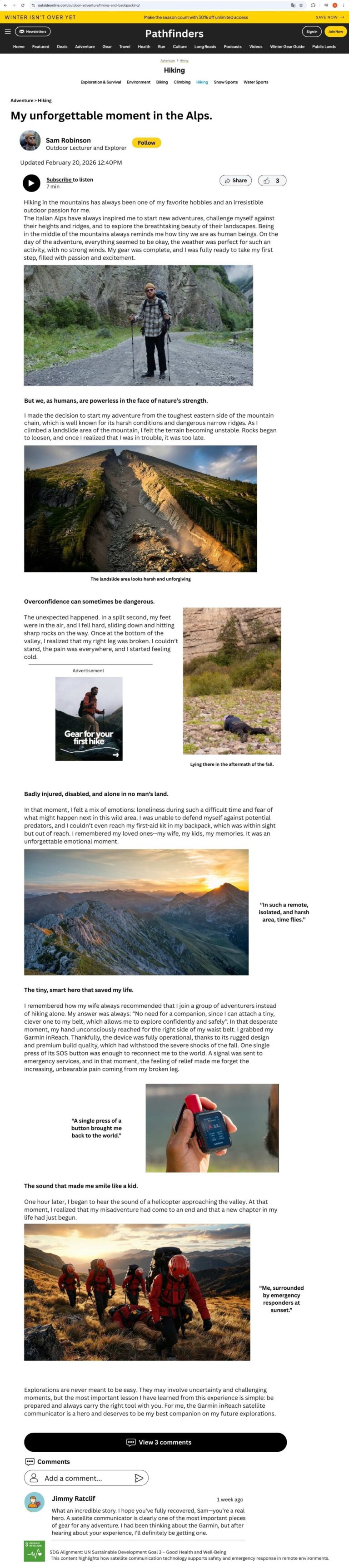
Influencer Blog Article:
Taking into consideration the strong engagement rate achieved by the blog article in the digital performance analysis—approximately 29.5%, despite the limited audience size—long-format narratives such as blog articles remain essential in supporting the consideration stage of the customer journey (Fitzgerald, 2014). A deeper, personal narrative helps strengthen emotional connection, which is why I chose to incorporate a blog article into this campaign. In this case, I tried to emphasise more on the tone, by adopting a tone that is emotionally engaging rather than overtly promotional. Meanwhile, the choice of channel is equally important. Since the company’s official blog is primarily educational and informational, with limited interactive features, I opted for a third-party blog published on a niche website specializing in outdoor activities. This decision was mainly justified by the platform’s highly targeted audience, whose specific interest in outdoor exploration increases the likelihood of relevance, trust, and meaningful engagement.
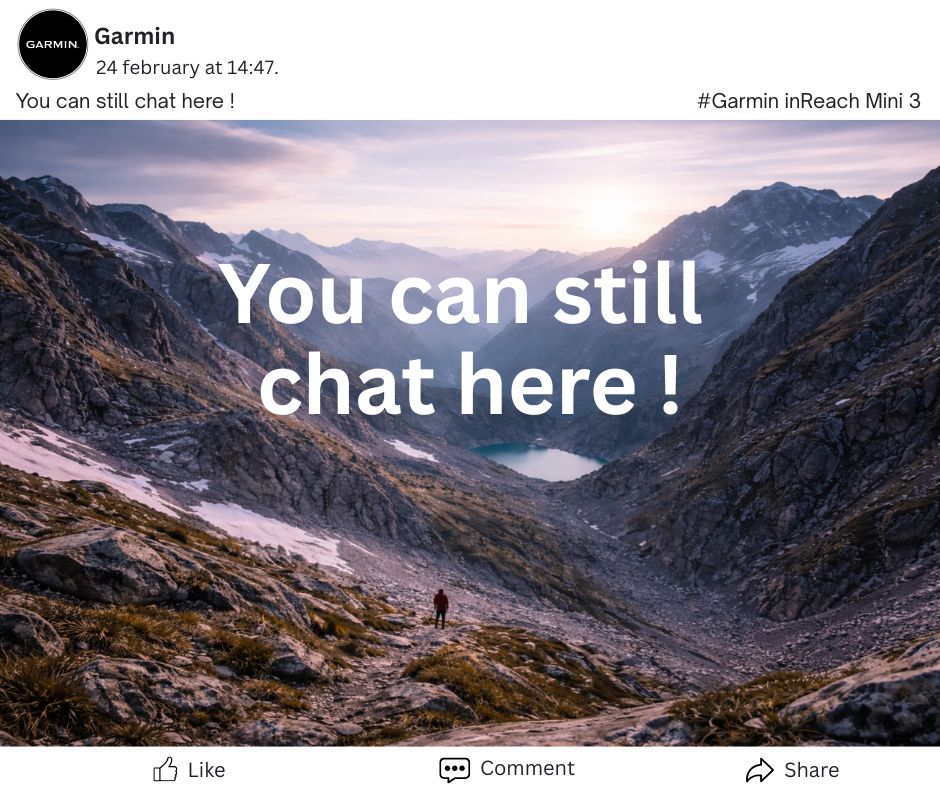
Facebook Visual Post:
Garmin’s branded Facebook page appears to represent the weakest element in its current digital strategy, with the lowest recorded engagement rate of 0.13%. This low performance may be largely attributed to passive content consumption, as the existing posts are predominantly product-focused, occasionally combined with achievement-oriented interaction posts.
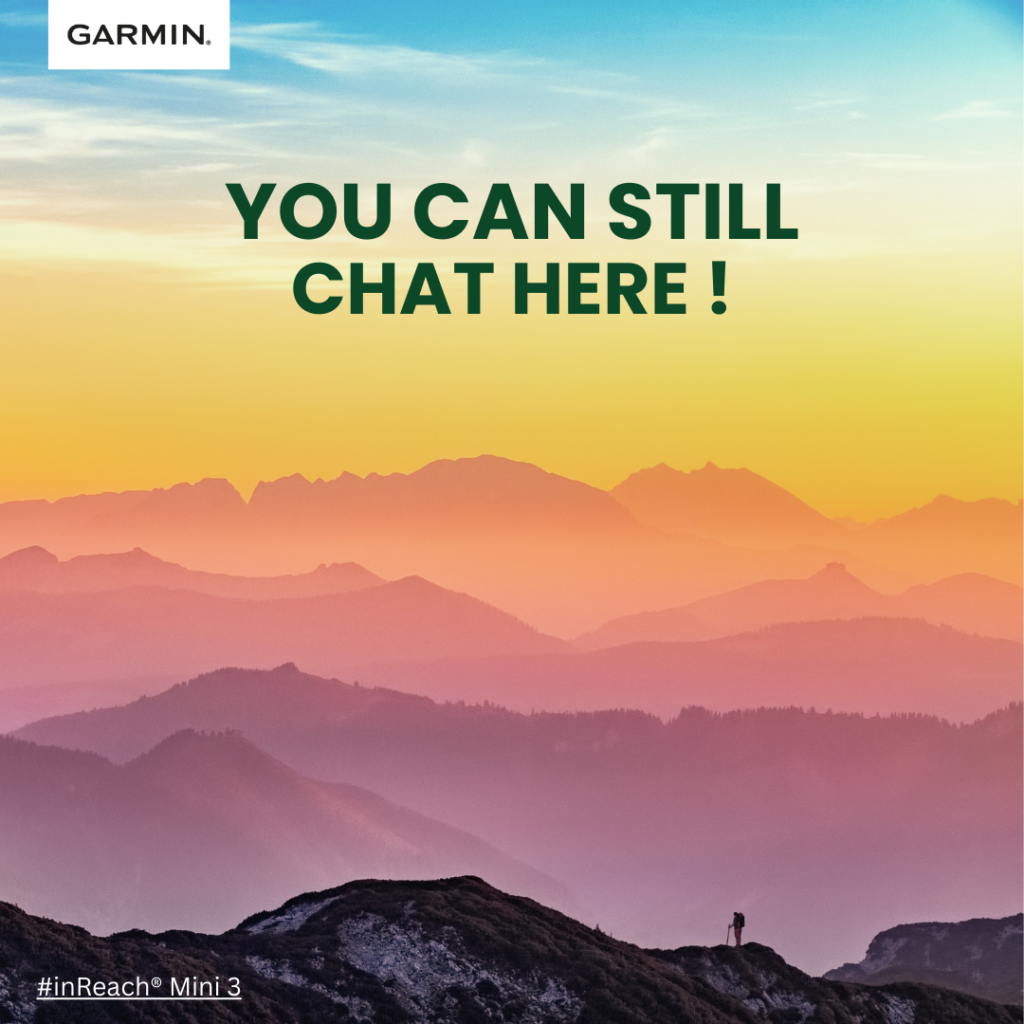
To address this issue, I proposed a minimalist visual concept inspired by the successful OREO campaign (OREO,2013), “You can still dunk in the dark.” The suggested visual depicts a Sam, the persona appearing very small within vast mountain scenery, accompanied by the message: “You can still chat here.” This approach intentionally shifts the focus from technical specifications to emotional reassurance. By emphasising connection and safety rather than product features, the campaign aims to transform passive viewers into more emotionally engaged participants.
At the same time, the visual reinforces the promotional dimension by highlighting the inReach device’s ability to maintain communication with loved ones in remote areas without cellular coverage (Garmin,2026). In this way, the concept balances emotional storytelling with functional value, integrating both reassurance and technological capability within a single, impactful message.
Alignment with Garmin’s Brand Strategy:
Rather than adopting a purely product-focused approach across the three pieces of content, the Garmin inReach campaign emphasizes three key elements: safety, confidence, and the ability to communicate in challenging hiking environments. This aligns perfectly with Garmin’s brand strategy, which is well known for emphasising safety, reliability, accuracy, and exploration.
KPI Measurement:
In terms of measuring the impact and effectiveness of the Garmin inReach campaign, key performance indicators (KPIs) such as engagement rate (likes, comments, and shares), audience, and video views are essential. Garmin’s Facebook page, where audience interaction has been comparatively lower than on other platforms, would serve as the primary channel to test the effectiveness of inReach campaign, while any positive impact on the other channels and formats would consolidate their existing performance.
Ethical Considerations:
From an ethical perspective, the Garmin inReach campaign emphasises authenticity and transparency. It relies on narratives related to real outdoor risks while positioning the product as a reliable and accurate solution. Importantly, the campaign integrates the safety aspect in a responsible manner, avoiding fear-based marketing.