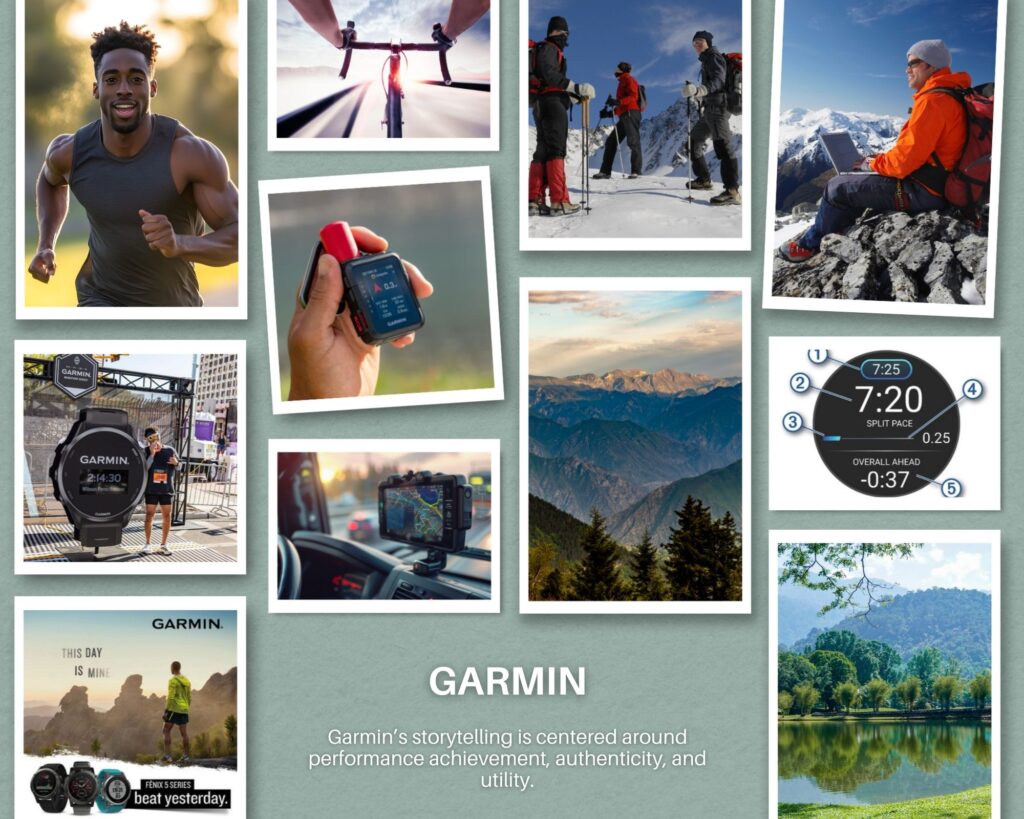
Garmin’s storytelling strategy is built around a clear and consistent purpose. Across platforms, rather than focusing on technical specifications or dry content, Garmin’s core narrative centers on two key elements: performance (personal progress) and authenticity and utility.
Through global brand campaigns such as “Beat yesterday” (Garmin Ltd,2015), Garmin positions itself as a performance partner and adopts a customer-centric approach (Porter,2003) in which the customer is presented as a hero capable of achieving more and continuously improving with the support of Garmin’s tools. In parallel, the brand employs an educational storytelling strategy through authenticity and utility narratives that are heavily blended to showcase the accuracy and reliability of its GPS-based products used in outdoor, fitness, and marine and aviation contexts (Latterly.org. (2024).
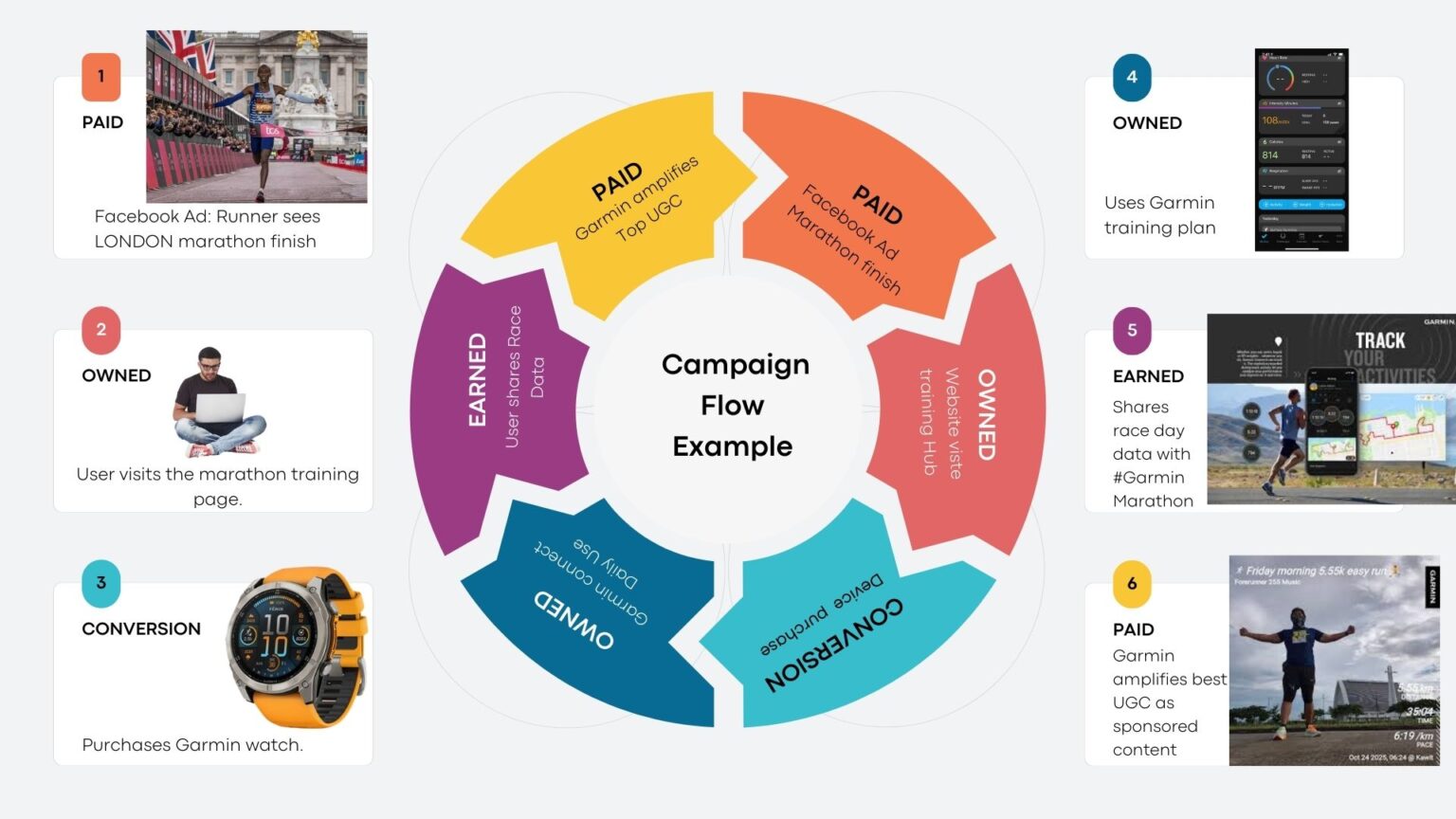
A campaign flow example showing Garmin’s customer journey.
Garmin relies heavily on the full POEM framework to distribute its narratives across channels and audiences, adopting different content formats to enhance its storytelling strategy. The company employs inspirational narratives (beat yesterday…), delivered through visual formats such as cinematic videos and social media content showcasing sporting moments, outdoor environment to engage its active target audience. Meanwhile, the brand adopts educational narratives using a product-Led approach (through a range of formats like tutorials, expert insights content as well as detailed product pages to highlight the capabilities of the company’s products and emphasis its technical credibility.
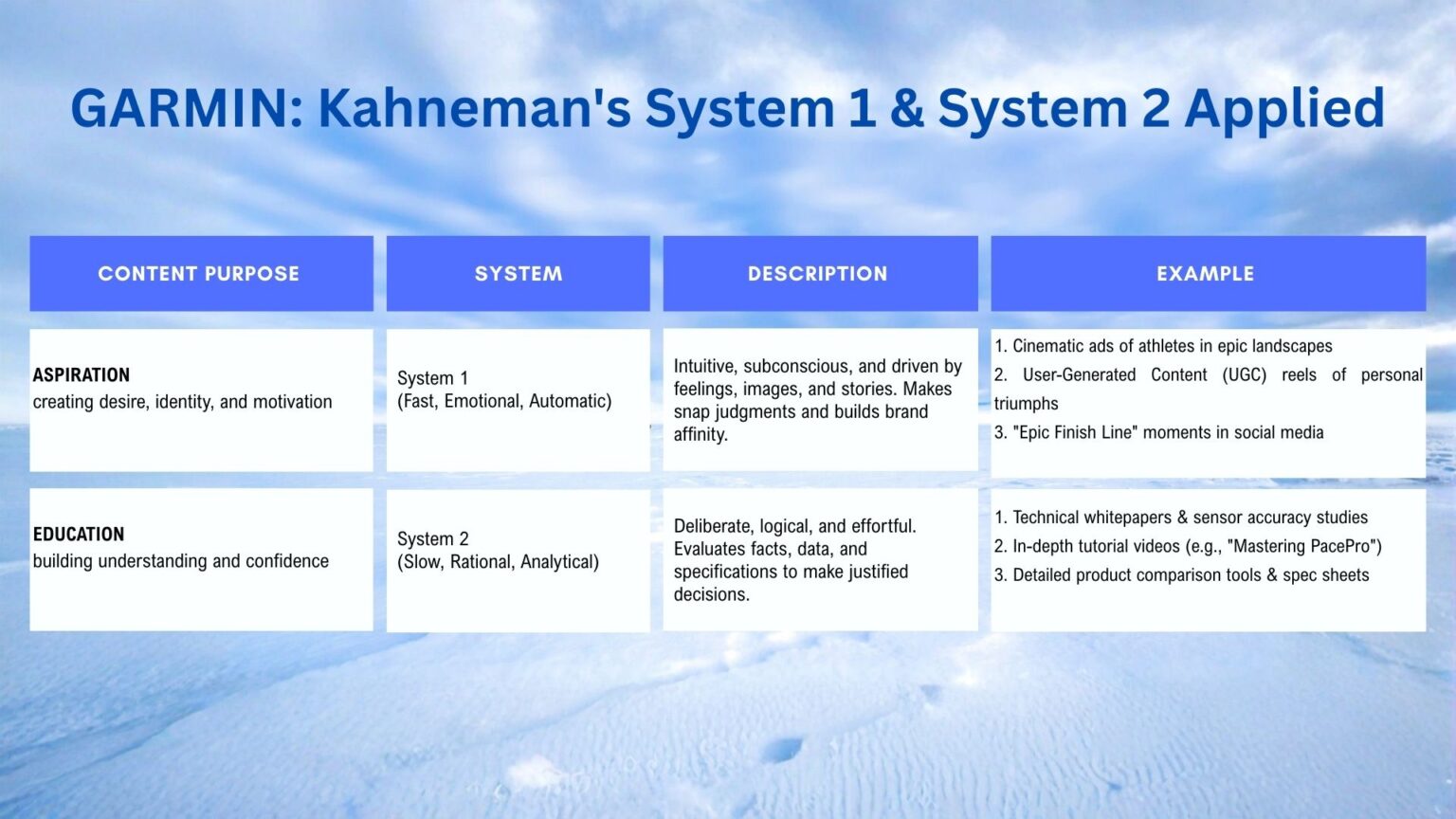
Kahneman’s System 1 and System 2 in the Garmin’s case.